Wednesday, January 8, 2014

Ad Week's Best Ads for 2013

It's that time of year when we take a moment to recap, and enjoy, the creative works of the past year. I'm sharing the list from Ad Week's 2013 Best of list, but I have one to add.

What are some common threads among these ads? And which one(s) spoke to you, and why?


Kmart "Ship My Pants" Agency: Draftfcb, Chicago


Chipotle "The Scarecrow" Agency: CAA Marketing, Los Angeles

Robinsons "Pals" (One of our Kearley favorites, too) Agency: BBH, London


Volvo Trucks "The Epic Split feat." 

Agency: Forsman & Bodenfors, Sweden


Nike "Possibilities" Agency: Wieden + Kennedy, Portland, Ore.

Dick's Sporting Goods "Every Pitch" Agency: Anomaly, New York


Geico "Hump Day" (Funny, and have  you seen the Dallas Mavericks spoof?!)  Agency: The Martin Agency, Richmond, Va.


Guinness "Basketball" (We loved this one!) 
Agency: BBDO, New York


RAM "Farmer" (a crowd pleaser!) 
Agency: The Richards Group, Dallas


Dove "Real Beauty Sketches" (A cool approach - get the tissues)
Agency: Ogilvy & Mather, Brazil


And one that didn't make the list that I really love - this one made me snort with laughter. 
Sprint: "The Lizzy & Kim Phone Call"

Agency: Leo Burnett


Wednesday, November 27, 2013

Direct Mail Still Works

We've spent a great deal of time over the last year talking about mobile marketing, social media, and various kind of online campaigns, but one thing we haven't spent much time on here is direct mail.

Guess what? It still works! Very well, in fact.

Over the last year, I've been able to observe direct marketing from the agency perspective as well as from the standpoint of the consumer. From an agency perspective, in recent years, many in the industry have wanted to abandon all traditional media for the perceived, less expensive electronic media (social) channels. However, despite the perception of direct mail vs. electronic channels, we continue to see ROI on direct mail – especially personalized direct mail campaigns – that exceeds goals and delivers results. Consider this auto loan campaign that launched in May for Central Star Credit Union in Wichita, KS and was supported primarily by direct mail:


Auto Loan Promo
Total promo-related loans
for month
(goal $500K)
May
$ 524,000
June
$ 532,000
July
$ 750,000

From a consumer perspective, my household was heavily marketed TO over the last year. My son graduated from high school this last May with a plan to go to college. Starting his Junior year, there began a sea of direct mail from various colleges and universities looking to recruit him as an incoming Freshman. 

The really interesting thing to me was the number of front-back postcards we received that looked somewhat canned versus the personalized mail we received that was more dynamic. My son was excited to receive mail solicitations, but particularly excited to see his name on the various pieces that were personalized. For a kid who rarely received things via USPS, this was a big deal to him. Ultimately, the university that had both personalized direct mail and a real, live contact person for us to work with through the process won out. Coincidence? Perhaps. It's also a university that has a strong program in his area of interest. However, I feel like there is something strong in the personalized marketing that works hand-in-hand with a real person to follow-up on the other side of the initiative. Something to think about as you ponder direct marketing campaigns in the future. 


Monday, November 4, 2013

You Can Take It With You: Mobile Advertising


So these cell phone things seem like they're going to stick around, huh? 

The movement towards digital marketing has been happening so quickly that it seems perfectly reasonable that your company or brand may have missed the boat on a few things. Mobile typically falls to the bottom of people's priority list which is strange considering it's quickly becoming one of the most effective forms of marketing. 

Smartphones have accounted for 10% of website traffic in 2013 which may not seem like a lot, but considering that they account for around 5% in 2012, we can deduce that we're seeing a fast and substantial growth in mobile usage to interact with brands. 

Adjusting to this movement doesn't have to be intimidating. There are basic steps you can take to optimizing your online presence for mobile. 

1. Responsive Design

You ever go to a website on your phone and have to pinch and zoom around to click the tab you want and then you hit the wrong button because your fingers are normal sized and these buttons are too close together? 

That's because that site isn't set up with responsive design which takes a website and makes it so that it will have a design that accommodates mobile viewing and surfing. What's listed above may seem like a superficial complaint, but it also severely affects a user's experience with your website. 

2. Mobile Ads

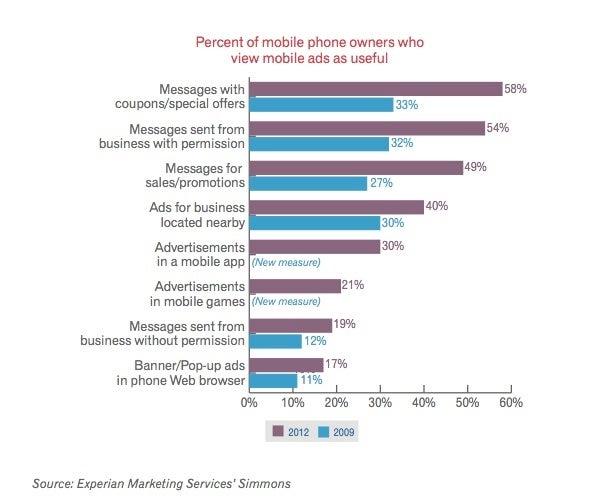
Take a look at the graph below. Once again the most notable thing here is growth. Mobile is growing in its use and in user favorability towards the ads on their devices. 


3. Mobile App

Not necessarily developing your own, but making sure that you're working with the ones that relate to your business. For example, if you're a credit union and have a listing on Yelp, are you responding to any of the reviews being written? 

As far as developing a mobile app, it's not something you should necessarily hurry into considering that it is a bit more complicated than what we've talked about so far, but if it seems like something that will legitimately enhance your brand experience, definitely look into it.

A study conducted by Flurry revealed that people are using mobile apps more than they're utilizing regular web browsing. It's certainly exciting, but make sure you do your research. Your brand may not fall into the most popular of mobile app usage categories

I could fill the rest of this blog up with mobile stats that would shatter your smartphone screen, but it really all boils down to this: have a presence on mobile. Yes. The digital world moves a little too quickly sometimes, but it's not going to wait for you to catch up. 


Monday, September 9, 2013

Facebook and Hashtags: #NotMeanToBe

In a few presentations that we've done on social media, I've thrown out one of my social media pet peeves of people using hashtags on Facebook even though they did nothing for them.

Then Facebook did their best to disparage my words by making hashtags work in the same way they do for Twitter.

Thanks, Facebook. I know you're really into this hashtag thing...


As it now appears thanks to a little digging by the team at Edge Rank Checker, I may not have to eat my words. 


To summarize: Posts with hashtags have less reach than those without them. 

Maybe it's just hashtag fatigue and Twitter is experiencing a similar problem? 


So there goes that. 

So what went wrong? Facebook has taken elements from other social media sites and been successful, after all. They took MySpace "profiles" and turned it into a "Wall." They butchered most other forms of instant messaging by including it on their platform (when was the last time you used AIM?). They've incorporated ads and business pages into their overall system without alienating a significant number of people and experiencing a MySpace-esque fall from grace.

So what went wrong with hashtags? 

Maybe it's too soon to declare the hashtag experiment dead, but seeing as many people would agree they didn't have any place on Facebook to begin with, let's ponder this. 

1) Facebook did nothing to improve the hashtag experience. 
Even when Facebook has borrowed an idea from another platform, it typically at least tries to improve on it. Hashtag use on Facebook is no different from what it is on Twitter. And Twitter is already becoming more popular than Facebook. 

2) Facebook's been around to long to add an idea that isn't their own. 
When Facebook was the new kid on the block, it was easier for it to take ideas from other people and incorporate them into their strategy. 9 years and one IPO later, it's getting a little too old for that...well, you know. Twitter's been around since 2006 and the word hashtag has always been synonymous with people even thinking about Twitter. With increased awareness of both sites, people are going to be a little more wary of Facebook trying to take something from Twitter. 

3) Most people who use Facebook heavily, also use Twitter heavily. 
There are so many options for every single thing you need in today's world, you don't need two things that do the exact same thing. You want what you use to fulfill a different need. You want Twitter for quick thoughts and hashtags. You want Facebook to dwell on and interact with a bit more. Facebook made the error of trying to keep up with the Jonses instead of just letting their thing be its own thing. 

Like I said, it might be too early to dance on the grave of Facebook hashtags just yet. Facebook isn't a company known for admitting its mistakes (hi, privacy issues) so I wouldn't even expect their functionality on Facebook to ever go away. I would caution against brands using Facebook hashtags. Because, at this point, they don't really seem to be doing much. Just get on Twitter, improve your SEO in the process, and hashtag away in 140 characters or less. Your consumers will appreciate it. 

Wednesday, September 4, 2013

Bad Ads

Every month in our newsletter, we feature our favorite ad of that month. What you don't see us talking about often are the ads we think are particularly bad. So we thought we'd give you a rundown of our least favorite ads this year. After all, you can learn just as much from a mistake as you can from a success.

Here we go...


KFC-I Ate the Bones
Well, if KFC's increasingly insane menu items didn't indicate what they thought of their customers, this campaign surely did. How dumb does KFC think its customers are that they could ever perceive boneless chicken (you know, that option that has been available for decades) as an innovation so new and groundbreaking that we'd buy into a reality of "I ate the bones?" Sorry, "#iatethebones," because this campaign was a real social media hit. 

Brut-Essence of a Man
So, what this ad is intimating, if I can understand this nonsensical 16 seconds, is that the "essence of a man" is his ability to get a woman pregnant? Don't know if you got the memo, guys, but no sensible person has used male fertility as a way to define manhood since kings were expected to produce male heirs. 

Even worse, there's a longer version (that Brut has apparently buried) in which this couple's dog is also impregnated by this manly aftershave. 

Golden Corral-2 for $20
Technically, this is a 2012 commercial. But I think Golden Corral's obliviousness to the potential offensiveness of this spot along with them only including this version on their official YouTube channel (which they think is less terrible for some reason) warrants its inclusion. Comedian Al Madrigal breaks down this commercial better than I could, but yes, this aired on actual televisions. 

Dunkin Donuts-Charcoal Donut
This lovely ad only made its rounds in Thailand, but was so ill-conceived that the outrage has carried stateside. So the obvious is that the ad features blackface which is inherently offensive. Other than that though...does anyone really want to eat something called "Charcoal Donut?" Charcoal. Donut. As in, "Hey, everyone, you know how much you love the idea of eating coal? Well we've given that to you now...in donut form. Enjoy." 

Let us know what you think of our list and share what ads you disliked this year in the comments or on Twitter @kearleydotcom

Monday, August 5, 2013

You Don't Know Internets


Memes. They're everywhere. Your friends text them to you sometimes. Buzzfeed articles are filled with them. They probably make you laugh.

But do they have any place interacting with your brand? 

Internet memes have become one of the most social experiences the internet has to offer. Someone uncovers a photo of a pig-tailed girl with braces and, overnight, the Gersberms phenomenon is born. The whole internet is sharing in this one thing, adding to it, changing what the girl holds and different variations spread like wildfire. 

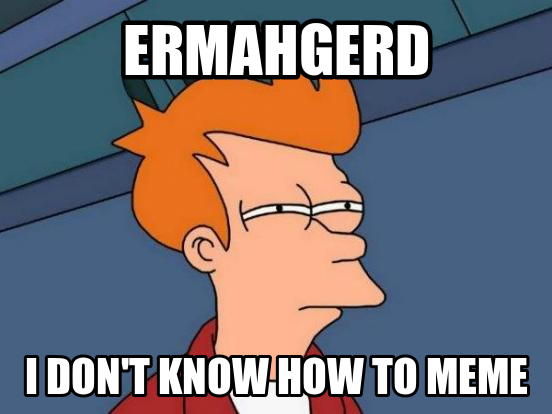
Gersberms, Futurama Fry, the Harlem Shake and others are so socially widespread, that brands are now looking to tap into these sensations to make it look like they're relevant.

Good idea, right?


But why is it a bad idea to try to engage with consumers on a more familiar level? I guess, it's not inherently bad, and it could potentially work sometimes. But let's examine the group behind these memes, Millennials, and how they respond to brands to begin with. 

For starters, Millennials don't trust brands. And (this one extends to every generation of young people that has ever existed) young people don't like any sort of organized entity trying to capture something they've already claimed as their own. 

You know, a brand trying to re-appropriate an internet meme to "look cool" and relevant is like a teenager's parent trying to relate to their kid by buying Magna Carta Holy Grail and proceeding to try to rap the lyrics with them. It'll just come across as trying too hard. 

Example: Yahoo's acquisition of Tumblr. In case you missed it: No one was happy about this

I like Marissa Mayer a lot, and I think her instincts were in the right place buying Tumblr and it could maybe even work out for them in the end. 

However, when you buy something like Tumblr and try to show them that everything is going to be okay with this, you're halfway to confirming their worst fears: Yahoo and Marissa Mayer just became every Tumblr user's parent. 

(Oh, and Tumblr user's have responded...Womp womp.) 

A few years ago, the Showtime series, Dexter, thought they could tap into the meme market with memes that they themselves created: 


Everything that could be wrong with a meme is on display here. It's manufactured, it's trying to reverse-engineer a moment (of all things), and it even has the Showtime logo on it! The thing that people love about memes is that they basically happen on accident and they come from a source that no one knows about. They're a blank slate for a lot of emotions and comments on the things happening around them. They can be personalized to fit one's personal life or even make fun of their university. This is not any of those things. The brand is overreaching in its attempt to be relevant when it didn't need to be. To everyone, the brand is basically this guy, essentially shouting at you that the brand is hip and cool. 

I realize that it's tempting to have your brand engage in a meme. They are, after all, very fun. But, you simply have to ask yourself: Does my brand need this? Or can it simply continue to speak for itself. 

People, Millennials included, will trust your brand much more if you simply let your brand be itself without trying to overreach into areas that you simply shouldn't be in. McDonalds, Coca Cola, Apple and others have yet to tap into memes because they know that they don't need to. They can find other ways to speak, and so can you. So the next time everyone around you is doing a Harlem Shake-type video, ask yourself: Is it really exciting or engaging if we do it just to do it? 

In other words, try to ignore it and...


Tuesday, July 9, 2013

The Importance of Retail

Look around your home or office.

What about this location makes you feel comfortable there? What makes you feel uncomfortable? These environments are second nature in how they affect us in our daily lives, however, a good brand should never forget how much of an impression their environment has to make on consumers.

The importance of retail merchandising to your brand should never be underestimated. It's one of the first impressions you'll get to make on a potential consumer and, often, it's one of the most lasting.

Does the retail reflect the brand? 

Just because it's an environmental part of your brand doesn't mean that it shouldn't fit with existing brand materials.

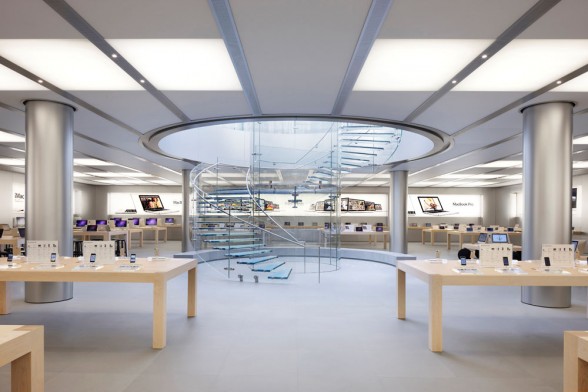
One of the best examples to consider is an Apple Store:


The setting is futuristic looking, sharp, clean, bright and crisp. All of those attributes fit into what Apple wants people to think their products are. Now, check out a Microsoft store: 


What this looks to say about its brand is that it doesn't know what it wants to say so it modeled itself after a successful brand's retail. This isn't Microsoft/Apple politics, this is an example of a brand not knowing how to inject its brand attributes into its retail. Once you've lost focus of your brand, you've lost your chance at successful retail. 

Here's an exterior shot of a branch for Educational Systems Federal Credit Union. The image on the outside is an illustration of their brand. They support education and you see that before you even walk through the doors. 


Is it welcoming? 


Is there a comfortable place for customers to sit? 


Any place for someone to grab a beverage while they wait? 

Remember what we first talked about: What kind of environment is your home? If your consumers feel like they're at home when they're interacting with your brand, it'll be that much stronger. 

Keep it pervasive, but not overbearing 

Your brand should be everywhere in plain sight. You want your consumers to be aware of where they are, but not like they're being smothered by your brand. 

Something as simple as office name plates can keep the brand strong in a subtle way: 


Keeping brand colors consistent across your retail will help consumers become familiar with your brand without alienating them from it: 


Creating an effective visual environment across your retail can seem like a daunting task, but it doesn't have to be complicated. The main thing to not lose focus of is, simply, your brand. As long as you have a good idea of what you're trying to say with your brand and don't overthink things, you can make your consumers feel right at home when they're in your branch, store or office.